

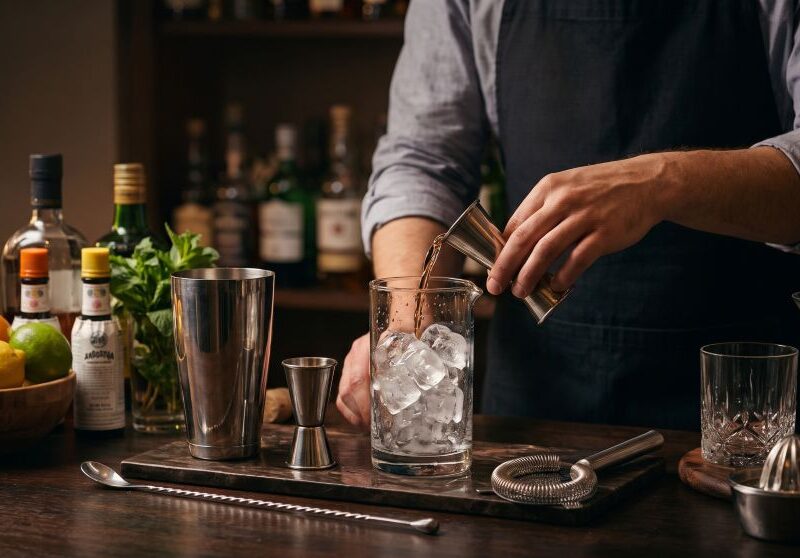
AI-generated image
Good home mixology comes down to three things: a few core techniques, a small set of reliable tools, and a habit of avoiding the mistakes that make drinks watery, flat or unbalanced. You do not need a full bar to make a great cocktail. You need measured ingredients, fresh citrus, good ice and a clear idea of what each technique does to a drink.
Key takeaways
- Shake drinks that contain citrus, juice or cream, and stir drinks made only of spirits, liqueurs and bitters.
- A jigger, a shaker, a strainer and a mixing glass cover most home recipes.
- Measure every ingredient, because small changes in proportion shift the balance of a drink quickly.
- Use fresh citrus juice and plenty of cold, solid ice instead of bottled juice and small, wet cubes.
- Learn a few classic templates first, then change one variable at a time.
Which mixology techniques should you learn first?
Most cocktails rely on a handful of methods. Understanding why each one exists is more useful than memorizing recipes, because the same logic applies to hundreds of drinks.
Shaking chills, dilutes and aerates a drink at the same time. Use it when the recipe contains citrus juice, egg white, cream or other ingredients that need to be combined thoroughly. Fill the shaker with ice, add the ingredients, close it firmly and shake hard for roughly 10 to 15 seconds, until the outside of the tin feels very cold.
Stirring chills and dilutes a drink gently, without adding air. It suits cocktails made only of spirits, vermouth, liqueurs and bitters, such as a Negroni or an Old Fashioned. Stir with a bar spoon for about 20 to 30 seconds and taste. The drink should feel cold and smooth, with the alcohol softened but not washed out.
Building means pouring ingredients straight into the serving glass over ice. Highballs and simple spritzes work this way. It is the easiest method for beginners, but ice quality and ingredient ratios still matter.
Muddling presses herbs, fruit or sugar to release flavor. Be gentle with mint, because crushing it hard releases bitter notes. Straining then removes ice and solids. Use a fine strainer as well as the one on your shaker when you want a clean, silky texture.
What tools do you actually need at home?
A short list of tools is enough, and quality matters more than quantity.
- A jigger with clear measurement lines, so you can pour accurate amounts every time.
- A two-piece shaker, either a Boston style tin set or a three-piece cobbler shaker.
- A mixing glass or sturdy pint glass and a long bar spoon for stirred drinks.
- A Hawthorne strainer and a small fine mesh strainer.
- A hand citrus juicer, because fresh juice makes a visible difference.
- A muddler, which is optional until you start making drinks with herbs or fruit.
Ice deserves as much attention as equipment. Large, solid, cold cubes melt more slowly than small or cloudy ones, so your drink chills without turning watery. Store ice away from strong-smelling foods, since it absorbs odors easily.
Which mistakes ruin home cocktails?
Most problems come from a few repeated habits, and all of them are easy to fix.
Pouring by eye is the most common one. Cocktails are small, balanced recipes, and an extra splash of syrup or liqueur can tip a drink from refreshing to sticky. Measure each ingredient, at least until you know the recipe by heart.
Using bottled citrus juice is the next. It often tastes flat or bitter compared with fresh juice. Squeeze lemons and limes shortly before you make the drink, and strain out the seeds.
Poor ice causes both over-dilution and under-dilution. Wet, small or old ice melts fast and waters the drink down. Skipping ice altogether in a drink that needs dilution leaves it harsh and hot with alcohol. Dilution is an ingredient, so treat it as part of the recipe.
Other frequent errors include:
- serving in a warm glass, which raises the temperature of the drink within seconds,
- shaking a spirit-only cocktail, which adds air and cloudiness where you wanted clarity,
- using too many ingredients, which hides the character of the base spirit,
- never tasting before serving, so there is no chance to adjust balance.
Chill glasses in the freezer for a few minutes, or fill them with ice water while you mix. It is a small step that noticeably improves the first sips.
How can you practice and improve at home?
Start with templates instead of long recipe lists. A sour follows a simple structure of spirit, citrus and sweetener, often in a ratio close to two parts spirit, one part citrus and one part sweetener, which you then adjust to taste. A Negroni uses equal parts of three ingredients. A highball combines a spirit with a larger amount of a mixer. Once you understand these patterns, you can swap ingredients and still get a balanced drink.
Change only one variable at a time, such as the sweetener, the citrus or the base spirit, and write down what you did. Small notes help you repeat the version you liked.
If you would rather see the methods in practice, a guided mixology session can help you check your shaking and stirring technique, learn how to balance flavors and ask questions in real time. Hands-on practice often makes the difference between following a recipe and understanding it.
Finally, enjoy responsibly. Measured pours make it easier to keep track of what you are drinking, and good cocktails are about flavor rather than strength.
Summary
Learn the main techniques, shake or stir according to the ingredients, and keep your tool kit small but accurate. Measure, use fresh juice, choose good ice and taste before you serve. With a few classic templates and careful notes, your home cocktails will become more consistent with every attempt.

